Supply Chain Forecasting Explained: How Yumpit Helps Restaurants Stay Ahead

Supply chain forecasting is one of the most powerful tools a restaurant operator can master. Yumpit connects sales data, inventory, and purchasing so orders are driven by real numbers, not gut feel.
What is supply chain forecasting?
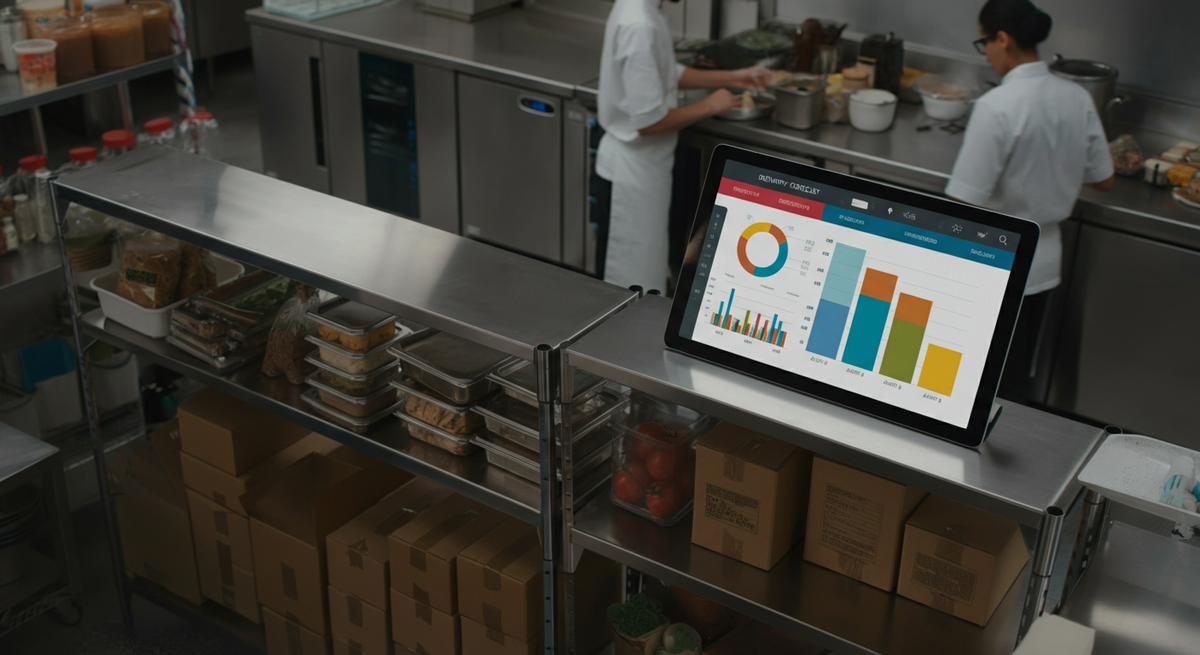
Supply chain forecasting is the practice of using data to predict future demand for ingredients, supplies, and goods, enabling proactive rather than reactive purchasing decisions. For restaurant operators, it means knowing how much of each ingredient you will need based on projected sales volume, historical usage patterns, seasonal trends, and upcoming events before you place an order.
At its most basic, it involves tracking ingredient usage per period and extrapolating forward. At its most sophisticated, it uses AI-powered demand modeling that factors in seasonality, day-of-week patterns, local events, and menu mix shifts to automatically generate purchase recommendations. Yumpit connects inventory management, purchasing, and sales forecasting in one platform, so forecasts are always accurate and actionable.
Why supply chain forecasting matters for restaurants
Restaurant supply chains are uniquely challenging. Ingredients are perishable, demand is variable, and the cost of getting it wrong is high in both directions. Over-order and you absorb spoilage costs and tie up cash in a walk-in cooler. Under-order and you face service disruptions, emergency purchases at inflated prices, and guest experience problems that are hard to recover from. Supply chain forecasting reduces both risks.
For multi-unit operators, the stakes are even higher. A supply chain that works at three locations becomes exponentially harder to manage at fifteen without systems to centralize purchasing data, standardize ordering, and provide corporate visibility into what each location is ordering and at what price. Supply chain forecasting also creates leverage with vendors. When you can show a supplier your historical usage and projected demand, you negotiate from data rather than assumptions.
Common challenges with restaurant supply chain forecasting
- Purchasing based on habit rather than data: managers order what they ordered last week rather than what inventory counts and sales data indicate is needed
- Disconnected sales and inventory data: when your POS and inventory tool do not communicate, building an accurate forecast requires manual reconciliation that rarely happens consistently
- Seasonal and event-driven demand is ignored: ordering to average demand without accounting for predictable spikes from holidays, local events, and day-of-week variation leads to consistently misaligned inventory
- No centralized purchasing visibility across locations: each location orders independently means lost volume leverage, inconsistent pricing, and no reliable group-level forecast
- Vendor price changes are not tracked systematically: when ingredient costs shift, and that change is not immediately visible in reporting, the impact on food cost goes undetected until it shows up in the P&L weeks later
- Forecasting tools are not connected to purchasing workflows: even operators who have sales forecasting data cannot always translate it into purchase orders without a manual step in between
How Yumpit’s connected platform transforms supply chain forecasting
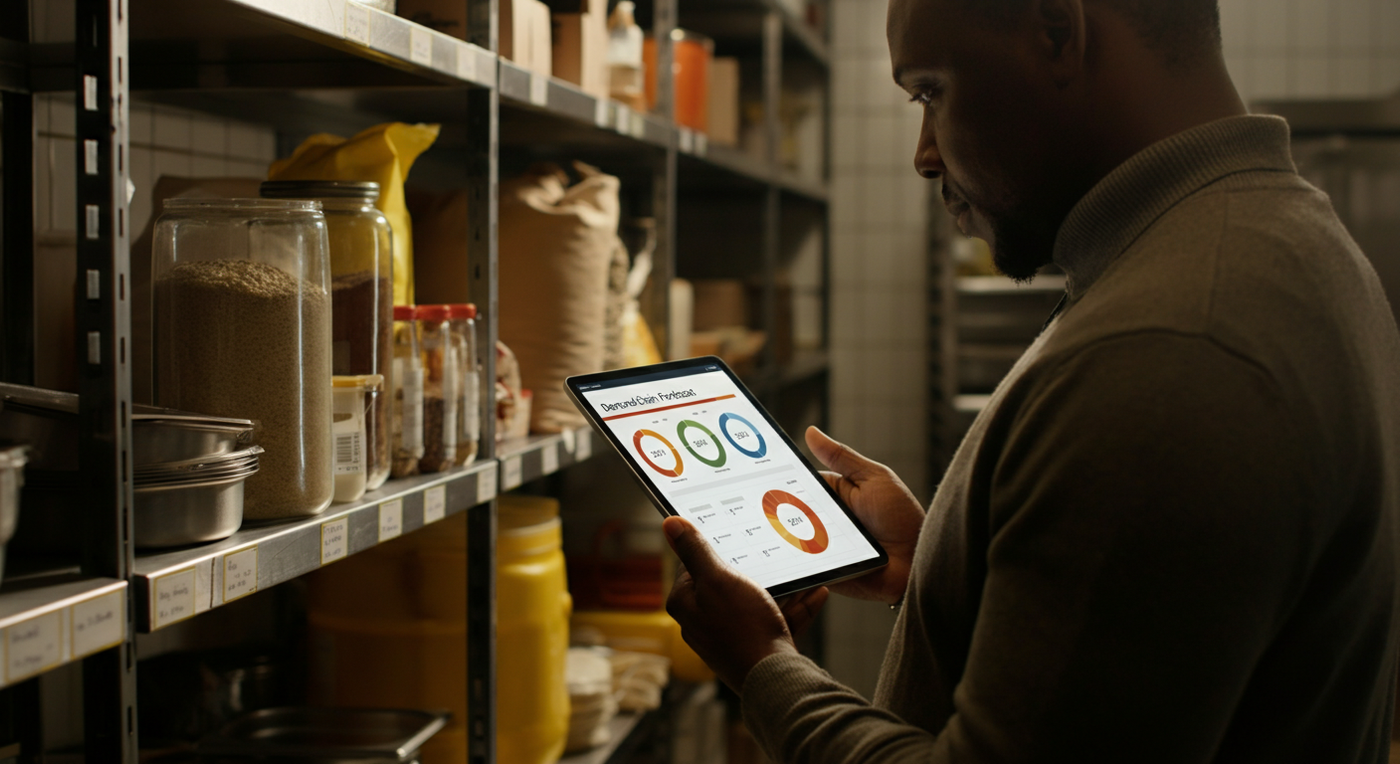
The accuracy of supply chain forecasting is directly determined by the quality and connectivity of the data behind it. When purchasing, inventory, and sales data all live in the same platform, forecasts reflect what is actually happening in the operation. Yumpit connects these three data streams so purchase recommendations are generated based on actual projected need rather than historical averages.
When vendor invoices are automatically matched to purchase orders, price changes are visible the moment they occur. When AI-powered tools analyze usage patterns and flag anomalies, supply chain problems surface before they compound into material cost variances. For multi-unit operators, this connectivity turns scale into a genuine advantage: the corporation can see what every location is ordering, at what price, and how that compares to forecasted need in real time.
What good supply chain forecasting looks like in practice
Consider a multi-unit casual dining group operating 12 locations. They struggle with inconsistent ordering across sites, significant food cost variance between locations, and a lack of a clear view of aggregate purchasing spend. Each general manager is placing orders independently, using habit and intuition rather than data, and the corporate team has no reliable way to benchmark one location against another.
After connecting Yumpit, their purchasing team can see ingredient-level usage across all locations, spot which sites are over-ordering proteins, compare vendor pricing across distribution centers, and generate purchase recommendations based on real usage data. In the first quarter, they reduced food cost variance by standardizing ordering par levels, eliminating duplicate vendor relationships that had been inflating costs, and negotiating a volume-based pricing agreement with their primary protein supplier backed by aggregated demand data. The result is a supply chain that scales with the business rather than against it.
Yumpit supply chain forecasting: key capabilities
- Sales forecasting connected to inventory and purchasing, so recommendations reflect actual projected demand
- Automated purchase order generation based on real inventory counts, par levels, and usage data
- Centralized vendor management with approved catalogs and negotiated pricing enforced across every location
- AI-powered dashboards that surface purchasing anomalies, price changes, and usage variances automatically
- Multi-location visibility so the corporation always knows what every site is ordering and at what cost
- Recipe-level cost tracking that ties ingredient price changes directly to menu profitability in real time
Supply chain forecasting FAQs
What is supply chain forecasting?
Supply chain forecasting is the practice of using historical data, sales trends, and demand signals to predict future ingredient and supply needs, enabling proactive rather than reactive purchasing decisions.
Why does supply chain forecasting matter for restaurants?
Restaurant ingredients are perishable, demand is variable, and the cost of getting it wrong runs in both directions. Over-ordering drives spoilage and ties up working capital; under-ordering causes service disruptions and forces emergency purchases at inflated prices. Accurate forecasting reduces both risks and protects the food cost margin.
What data is needed for accurate supply chain forecasting?
Effective forecasting requires historical sales data broken down by day part and menu item, regular inventory counts, recipe-level ingredient usage data, and current vendor pricing. The more granular and consistent the data, the more accurate the forecast.
How does AI improve supply chain forecasting?
AI improves forecasting by identifying patterns that manual analysis misses — seasonality curves, day-of-week demand shifts, the impact of local events on traffic, and menu mix changes that alter ingredient consumption. AI-powered models also detect anomalies in real time, flagging unusual usage or price changes before they become material cost problems.
How does Yumpit handle supply chain forecasting across multiple locations?
Yumpit centralizes purchasing, inventory, and sales data across every location in a single platform. Corporate teams get real-time visibility into what each site is ordering, at what price, and how that compares to forecasted need. Group-level purchase recommendations allow operators to leverage aggregate volume in vendor negotiations and enforce consistent ordering standards across the entire portfolio.
Conclusion
Supply chain forecasting is not a complexity reserved for large enterprise operators. Any restaurant group that wants to stop ordering reactively, reduce food cost variance, and build stronger vendor relationships needs the data infrastructure to enable accurate, actionable forecasting. Yumpit connects sales, inventory, and purchasing in one platform so your supply chain decisions are always driven by real data rather than assumptions that cost you margin every time they are wrong.
Ready to take control of your supply chain? Get started with Yumpit today and turn forecasting from a guessing game into a genuine competitive advantage.